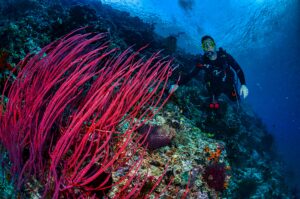
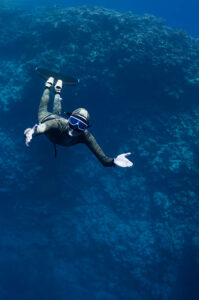
When we talk about commercial diving vs recreational diving, we will find that the simple difference between them is that commercial divers get money from their work underwater, but recreational divers only dive for fun.
commercial Diving vs Recreational Diving
You are probably wondering now if scuba instructors, Divemasters and other professional divers are considered commercial divers. Actually, also PADI Pros get paid to dive; they aren’t regarded as commercial divers.
As you understand from the name commercial divers do things that related to commerce, such as:
- Welding.
- Salvage.
- Maintaining underwater infrastructure.
They also do scuba diving in rough conditions, such as extreme depths, strong current and bad visibility and can stay down for some hours. On the other hand, recreational divers should never exceed 40 meters.
We can summarize commercial diving in three sentences:
- Wearing specialized equipment.
- Receiving different training.
- Diving to depths that recreational divers never go.
What Is Commercial Diving?
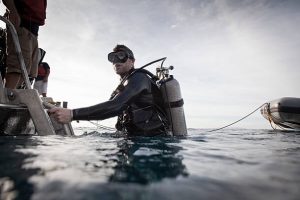
There are many occupations that can be included under commercial diving, that’s why this term is a broad one. As a commercial driver, you can work offshore in oil rigs or dive in local rivers and lakes.
Jobs that included under commercial diving, including:
- In drinking water assessment.
- Diving in polluted water.
- As underwater inspector to search for signs of damage in underwater bridge pylons, cables and pipelines.
- In public safety diving.
- In salvage to recover any items or vessels.
- In construction and maintenance that includes dams, bridges or other infrastructure.
- In underwater demolition.
From the information you have already read, you can understand that commercial divers use different scuba diving equipment then recreational divers. Many commercial divers don’t wear scuba tanks. Although some of them dive with rebreathers, most commercial divers breathe with the help of surface-supplied breathing apparatus.
Most commercial divers are wearing a full face mask with an integrated device that helps them communicate with other school divers or the team found at the surface.
Depending on the conditions they dive into, they usually wear a type of mask that covers the entire face without covering the top and back of the head or they wear a helmet that covers the entire head. Diving with this equipment is sometimes called hard hat diving.
Commercial diving is regarded among the most high-paying scuba diving jobs because commercial divers have to work long shifts in extreme conditions.
Saturation diving
Saturation diving is a type of commercial diving in which commercial divers spend weeks underwater. And to be able to work at extreme depths they live in pressurized Chambers.
Commercial Diving vs Technical Diving
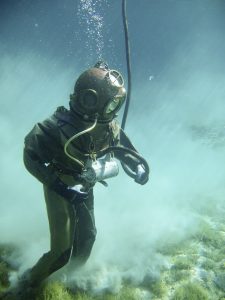
When you compare Commercial Diving with technical diving, you will find that the line between them is blurry because in both types scuba divers stay underwater for extended periods and usually dive below the limits of recreational diving. They also use almost similar equipment, such as full face masks and rebreathers.
Both commercial and technical divers have to complete specialized training to be prepared for diving in challenging conditions.
When we put commercial diving vs technical diving we will find that the differences between them comes down to:
- In technical diving, divers explore the underwater world for fun and choosing the diving site is up to them.
- In Commercial Diving, scuba divers get paid and don’t choose the diving sites.