Whether you are a novice scuba diver or an experienced one, you will need good-quality scuba gear to reveal the mysteries of the underwater world and have marvelous adventures. suitability, fit and comfort are the three most important considerations to keep in mind while choosing a gear. If you aren’t sure about how this article is useful to you, there is one way to find out. Let’s go.
what is scuba gear?

Scuba gear is the scuba diving equipment used by divers to be able to breathe comfortably, move freely and see clearly while being beneath the surface of the sea.
Gear helps divers recognize the underwater world well. It makes it possible to be somewhat of an aquatic being even if for a little while. you can see clearly with the help of the diving mask and swim efficiently using fins. The scuba regulator and the tank are used to provide you with the air you need.
You can also wear a wetsuit in cold water to keep you warm. If you want to know more information, visit the PADI dive shop and choose the best scuba gear that has color coordination to look good.
Where will you dive?
You can choose your dive site freely, as you can dive anywhere there is water. You will choose your scuba gear based on the environment of the dive site, cause there are slight differences.
We can categorize scuba diving equipment into three general groups. There are some exceptions, as some gear are suitable for all categories. for example, one mask will be fine in all environments.
Tropical scuba equipment
when the temperature of the water is 23°C/75°F or even warmer and the water is clear that you can see through it. You will only need a minimum exposure protection. The scuba components you can choose should be streamlined and lightweight.
Temperate scuba equipment
When you choose a temperate climate with a temperature of 15-24°C/60-70°F. you have maximum versatility from scuba gear, cause you can do scuba diving in the tropics and in water that’s more bit cooler.
Scuba equipment in cold water
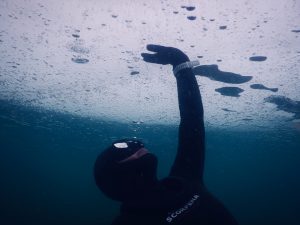
Diving in water cooler than 15°C/60°F will be fantastic, as with the right equipment and good exposure protection, you will have spectacular diving. contrary to what you think, doing scuba diving in cold water is comfortable.
Scuba gear list
We can divide the scuba gear list into three groups:
Essential scuba gear
- Mask
- Drysuit or wetsuit
- snorkel
- A regulator
- Dive weight in case of local diving
- surface marker buoy
- Defog
- Buoyancy control device (BCD)
- Fins
- Dive computer
Advanced scuba gear
- compass
- Diving knife
- Tank banger
- Dive light
Accessories
- Dry box
- Underwater camera
- First aid kit
- Writing states
Technical scuba diving equipment you should use
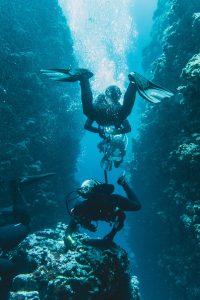
Diving beyond normal recreational scuba diving limits is called technical (tec) diving. Tec diving isn’t for beginners cause it requires experienced divers who have trained a lot and have additional equipment. You can use one scuba tank for recreational diving, but in tec diving, divers use twin cylinders or closed-circuit rebreathers (CCRS) and two or more scuba tanks with different gas blending each of them.
They also usually have two completely independent regulators and dive computers. All this is in addition to the regular dive equipment.
Visit the nearest PADI dive resort to get more advice for tec diving gear. Here you a list of what typical tec diver may use:
-
A primary mask and a backup one
Most of tec divers use compact masks because this type of mask provides minimal resistance in water. However other types of masks will be adequate. The tec divers hold an extra mask in their pocket in case of losing or damaging the primary mask.
-
Fins
Tec divers prefer wearing dry suits that require adjustable fins that are large on style with open heels.
-
Wing-typed BCD with harness
Tec divers use highly capacity BCDs and there is a backup gas bladder located between the harness and cylinder. The importance of the gas bladder is because the tec dive may be too heavy to swim back to the surface if there is a problem in the main BCD.
The harness is a strap that extends over the shoulder, the waist and the crotch, its job is holding the scuba tanks to the tec diver’s back. It has D-rings that are mounted on the diver’s shoulder and at the waist to put clipping equipment on it.
There is a primary regulator and a secondary one. The primary regulator has a 2 meter/7_foot hose, its job is to share gas with a teammate in case of an emergency. The secondary regulator is independent and used only if there is any problem with the primary regulator, as it has the same job.
-
Two cylinders
The high-capacity cylinders are filled upon the dive requirements. It can be filled with enriched air, high-pressure compressed air or trimix. The decompression cylinder is independent and clipped with the regulator to the side harness. Tec divers usually carry two cylinders cause they use extra tanks to extend the dive time.
-
Multigas dive computers with a submersible pressure gauge (SPG)
There are usually two types of dive computers. A primary one and a backup one, their jobs include tracking and displaying decompression requirements providing the tec divers with different types of gas pleds that help in optimizing decompression. SPGs should be integrated into the dive computers, If not it will display the amount of air remaining in the cylinder.
-
Drysuit
The diving suit isolates the diver’s body from the seawater in a long-duration dive to make him feel comfortable.
-
Additional equipment
– compass
– Delayed surface marker buoy (DSMB)
– Emergency signaling devices
– state
– Z-knife
– Backup dive tables
– Life bag
– safety reel
Common questions about scuba gear
In the last part of our article, here you the most common questions with their answers:
How much does full scuba gear cost?
The cost of full scuba gear for recreational diving is ranging from 800$ to 5000$.
What is scuba gear called?
Scuba is the acronym for self-contained underwater breathing apparatus. The word scuba is used to refer to any breathing apparatus the diver used to help him breathe while being beneath the waves.
What is used in scuba tanks?
Scuba tanks are filled with compressed air that contains 79% nitrogen and 21% oxygen which is close to the same ratio of oxygen and nitrogen in atmospheric air.
How does scuba gear work?
Briefly, the scuba includes metal tanks filled with compressed air. The regulator reduces the air pressure in the tank to make it breathable. The hose carries the breathable air to the diver’s mouth. When the dive exhales the air, the air is released as little bubbles in the water.